

CONVEYOR SYSTEM
Move products smarter, faster, and with less effort.
Conveyor systems are designed to streamline the movement of materials within a warehouse, production line, or distribution center. Instead of relying on manual transport or forklifts for every movement, conveyors create a continuous, efficient flow of goods. From cartons and totes to pallets and bulk items, conveyor systems help reduce labor, improve speed, and increase overall operational efficiency.
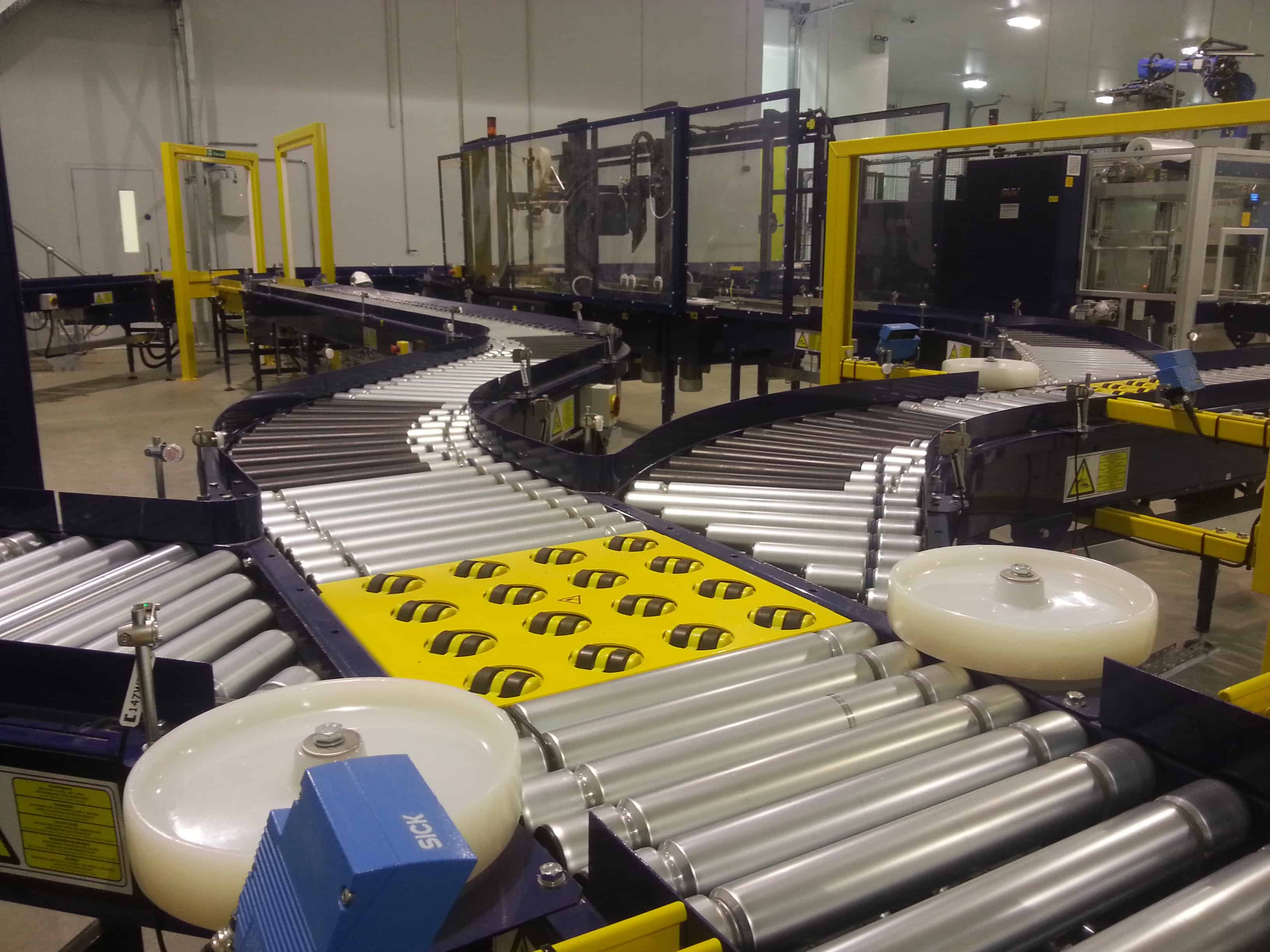
Built to handle continuous movement
Conveyor systems are engineered to move products consistently and reliably across different stages of an operation.
Typical capacities depend on the system type:
Light-duty conveyors (cartons, totes): 50–100 lbs per linear foot
Medium-duty systems: 100–500 lbs per linear foot
Heavy-duty conveyors (pallets): 1,000+ lbs per load
Capacity varies based on conveyor type, width, motorization, and application.
Keep operations flowing
Conveyors eliminate unnecessary handling and reduce bottlenecks by creating a smooth product flow.
They can be integrated into picking, packing, sorting, and shipping processes—allowing materials to move efficiently without constant manual intervention.
Designed around your operation
Conveyor systems are highly customizable and can be configured to match your workflow:
Straight conveyors for simple transport
Gravity conveyors for low-cost, manual flow
Powered conveyors for continuous movement
Incline/decline systems for elevation changes
Sortation systems for routing products
Layouts are built around your space, process, and throughput goals.

What makes up a conveyor system?
A conveyor system is made up of key components that work together to move products efficiently and safely.
Conveyor frame (the structure)
The frame supports the entire system and defines its layout.
Steel or aluminum construction
Designed for durability and stability
Custom lengths and widths available
Rollers or belt (the moving surface)
This is where the product sits and moves.
Roller conveyors (for cartons, totes, pallets)
बेल्ट conveyors (for smaller or irregular items)
Designed based on product type and weight
Drive system (the power behind it)
Powered conveyors use motors to move materials.
Electric motors with controlled speed
Chain or belt-driven systems
Can be automated or manually controlled
Supports and legs (stability on the floor)
These components keep the system level and secure.
Adjustable heights
Anchored or mobile depending on setup
Controls & sensors (the smart layer)
Advanced systems include automation features:
Start/stop controls
Sensors for product detection
Integration with warehouse systems
Where conveyors make the biggest impact
Conveyor systems are widely used in operations that require consistent product movement, such as:
Warehousing and distribution
E-commerce fulfillment
Manufacturing and assembly lines
Packaging and shipping areas
They are essential for improving speed, reducing labor, and maintaining workflow consistency.
A typical setup
A standard conveyor system might include:
40–100 ft conveyor line
Combination of gravity + powered sections
Integration with packing or shipping stations
Throughput designed around daily volume
Each system is tailored to match operational flow.
Where it works best
Conveyors are ideal for:
Cartons and boxed inventory
Totes and small packages
Order picking and packing lines
Shipping and receiving areas
Assembly and production processes
They are especially valuable in operations with high volume and repetitive movement.