


SELECTIVE RACKING
The most common storage system used in warehouses today.
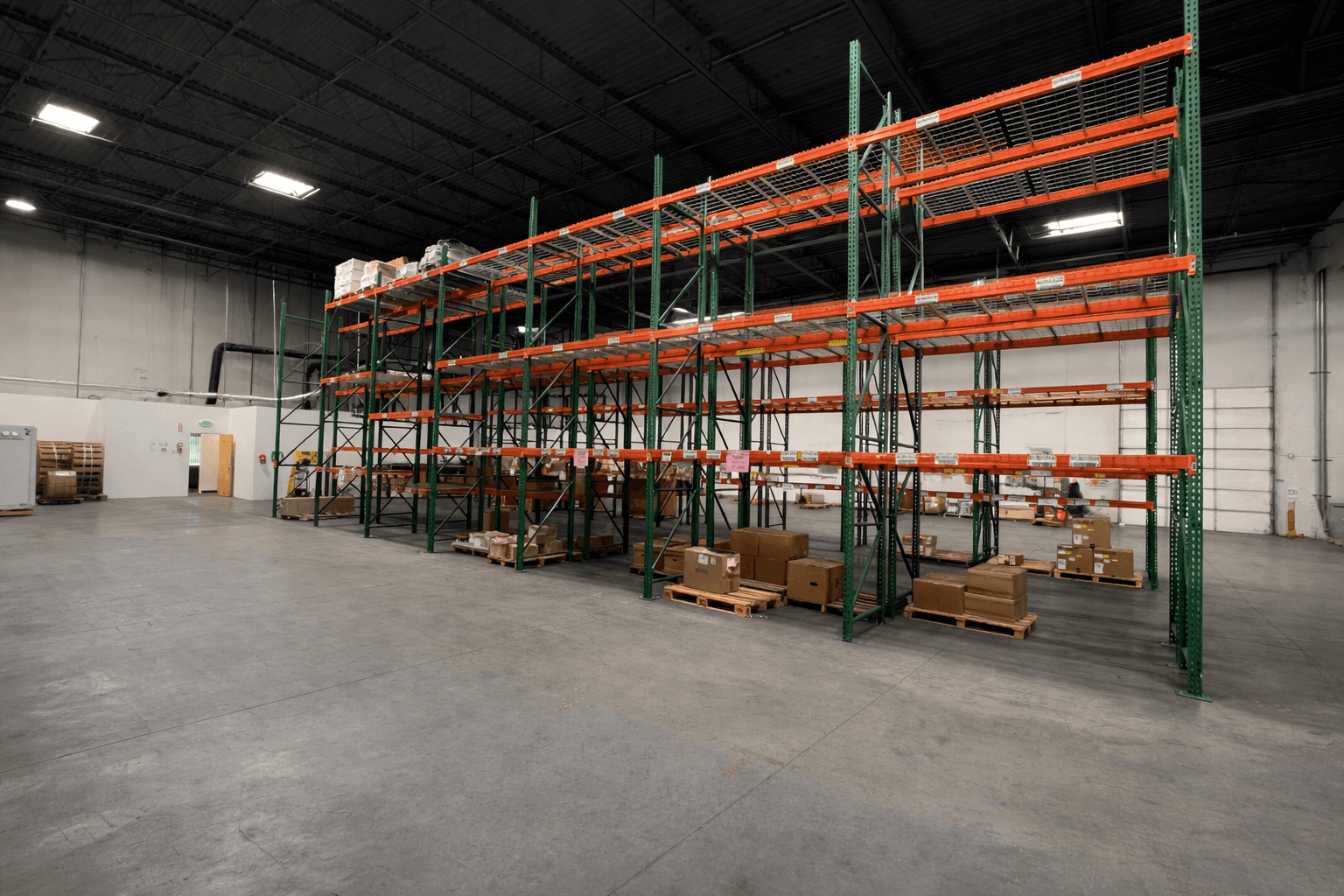
Selective pallet racking is the backbone of modern warehouse storage. It provides direct access to every pallet, making it the ideal solution for operations that handle multiple SKUs and require fast, organized inventory management. From small storage facilities to large distribution centers, selective pallet racking offers flexibility, scalability, and efficient use of vertical space.
How Much Weight Can It Hold?
Most pallet rack systems support 2,000 – 5,000 lbs per pallet position, depending on the beam size and rack configuration.
For heavier applications, racks can be engineered to support significantly higher loads.
Easy Access to Every Pallet
One of the biggest advantages of selective racking is 100% pallet accessibility.
This means forklifts can reach any pallet without moving others first — making it ideal for warehouses with many SKUs or frequent inventory movement.
Flexible Layouts
Selective racks can be arranged in different layouts depending on your warehouse size and forklift type.
Common configurations include:
Back-to-back rows for efficient pallet storage
Wide aisle layouts for standard forklifts
Narrow aisle layouts for higher storage density
Because rack levels are adjustable, the system can easily adapt to different pallet sizes and inventory changes.

Now that you know what Selective Racking does, here’s what makes it work.
A typical pallet rack system is built from a few key components that work together to safely support palletized loads.
UPRIGHT FRAMES
These are the vertical steel structures that support the entire rack system.
Typical specs:
Heights: 8 ft – 40 ft
Depths: 36”, 42”, or 48”
Anchored securely to the warehouse floor
Uprights determine how tall your storage system can go.
LOAD BEAMS
Beams connect between upright frames and hold the pallets.
Common beam lengths:
96” (8 ft)
108” (9 ft)
120” (10 ft)
144” (12 ft)
Most beam levels store two pallets per level.
WIRE DECKING
Wire decking sits on top of the beams and provides additional support for pallets.
It helps:
Prevent pallets from falling through
Improve load stability
Allow fire sprinklers to work properly
Wire decks are one of the most common rack safety additions.
PALLET SUPPORTS
Pallet supports are steel bars installed between beams to provide extra reinforcement.
They are often used when storing:
Plastic pallets
Smaller pallets
Irregular loads
ROW SPACERS
Row spacers connect back-to-back rack rows and help maintain proper spacing and stability.
Understanding the components is step one. Here’s how they come together in a standard rack setup.
TYPICAL RACK SETUP
A standard pallet rack section usually includes:
Two Upright frames
Several Beam levels
Two pallets stored per level
Example configuration:
Rack height: 20 ft
Beam length: 96 in
Levels: 3 levels + floor storage
Total capacity: 8 pallets per rack bay
Standard Pallet Size (U.S.)
Most warehouses in the U.S. use the standard: 48” x 40” pallet
Typically two pallets fit on each rack level with a few inches of clearance between them for safe forklift operation.
Forklift Aisle Space
The aisle width in your warehouse depends on the type of forklift used.
Typical aisle widths:
Counterbalance forklift → 12–13 ft
Reach truck → 8–10 ft
Very Narrow Aisle systems → 6–7 ft
Choosing the right aisle width helps maximize storage capacity while keeping operations safe.